
Modular Buildings and ADA Access: Why Steps, Decks, and Ramps Matter
When we think about safe, accessible entry into buildings, it’s easy to assume that progress has already been made. After all, the Americans with Disabilities Act (ADA) was signed into law more than 30 years ago. Yet despite decades of regulation and awareness, accessibility gaps remain widespread across the United States.
According to recent data, 1 in 4 adults in the U.S. lives with some form of disability, with mobility and cognitive impairments accounting for a significant portion of that population. At the same time, studies show that an estimated 65% of curb ramps and nearly half of sidewalks nationwide are still not fully accessible. These statistics highlight a critical truth: accessibility is not just a code requirement; it is an ongoing responsibility.
This is where modular construction, paired with well-designed steps, decks, and ramps, plays a vital role.
In modular buildings, access components are not an afterthought. Steps, decks, and ramps are essential elements that allow buildings to function safely, compliantly, and inclusively from day one. Much like modular buildings themselves, these systems are designed for efficiency, flexibility, and long-term performance.
Below are several reasons why steps, decks, and ramps are such a natural extension of modular construction and why they deserve careful consideration early in the planning process.
The Role of Steps, Decks, and Ramps in Modular Buildings
Speed of Assembly
Similar to modular buildings, steps, decks, and ramps are often constructed in a controlled factory environment. This allows them to be delivered to the site ready for installation, minimizing on-site labor and accelerating project timelines. When paired with modular units, access systems can be installed quickly, helping facilities become operational sooner.
Cost-Effective Solutions
Just like modular buildings, prefabricated steps, decks, and ramps offer a cost-effective alternative to traditional site-built access systems. Standardized designs, efficient manufacturing, and reduced labor hours contribute to lower overall project costs without sacrificing quality or compliance.
Accessibility and ADA Compliance
Properly designed ramps, steps, and decks are critical to meeting ADA requirements. These systems ensure that buildings are accessible to all users, including those with mobility challenges, and help owners avoid compliance issues down the line.
Durability and Longevity
While modular buildings and their access components are often labeled as “temporary,” their lifespan tells a different story. High-quality steps, decks, and ramps are engineered for durability and can remain in service for many years, even in demanding environments.
Flexibility for Changing Needs
One of the greatest advantages of modular construction is flexibility, and access systems are no exception. If a modular building is relocated, expanded, or reconfigured, then the steps, decks, and ramps can often be moved or adapted along with it. This provides peace of mind for owners who need solutions that can evolve over time.
Improving Access with a Safer, More Welcoming Entrance
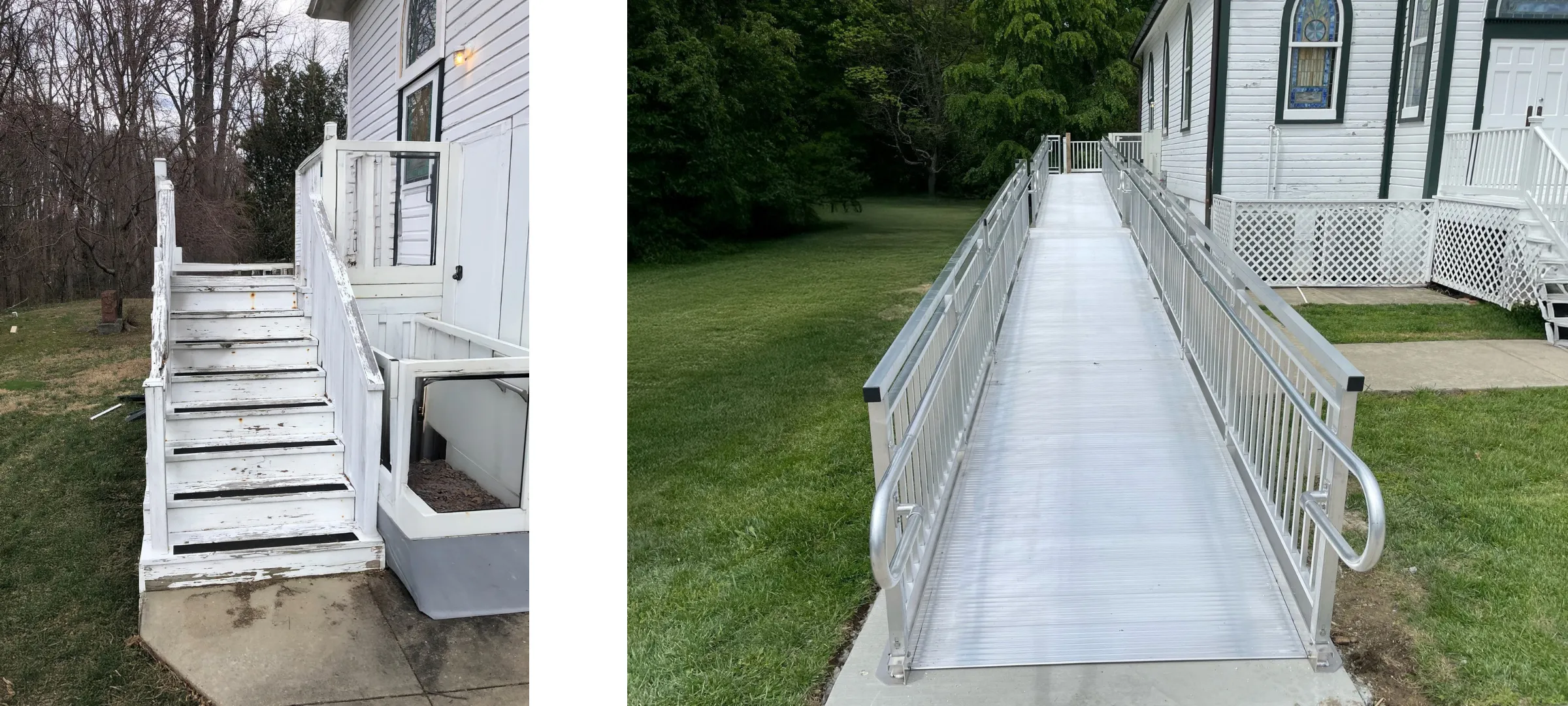
Sometimes the most impactful upgrades are the ones that simply make a space easier and safer for everyone to use. That was the goal behind this recent accessibility improvement at a local Military base chapel, where aging stairs were no longer meeting the needs of visitors or staff.
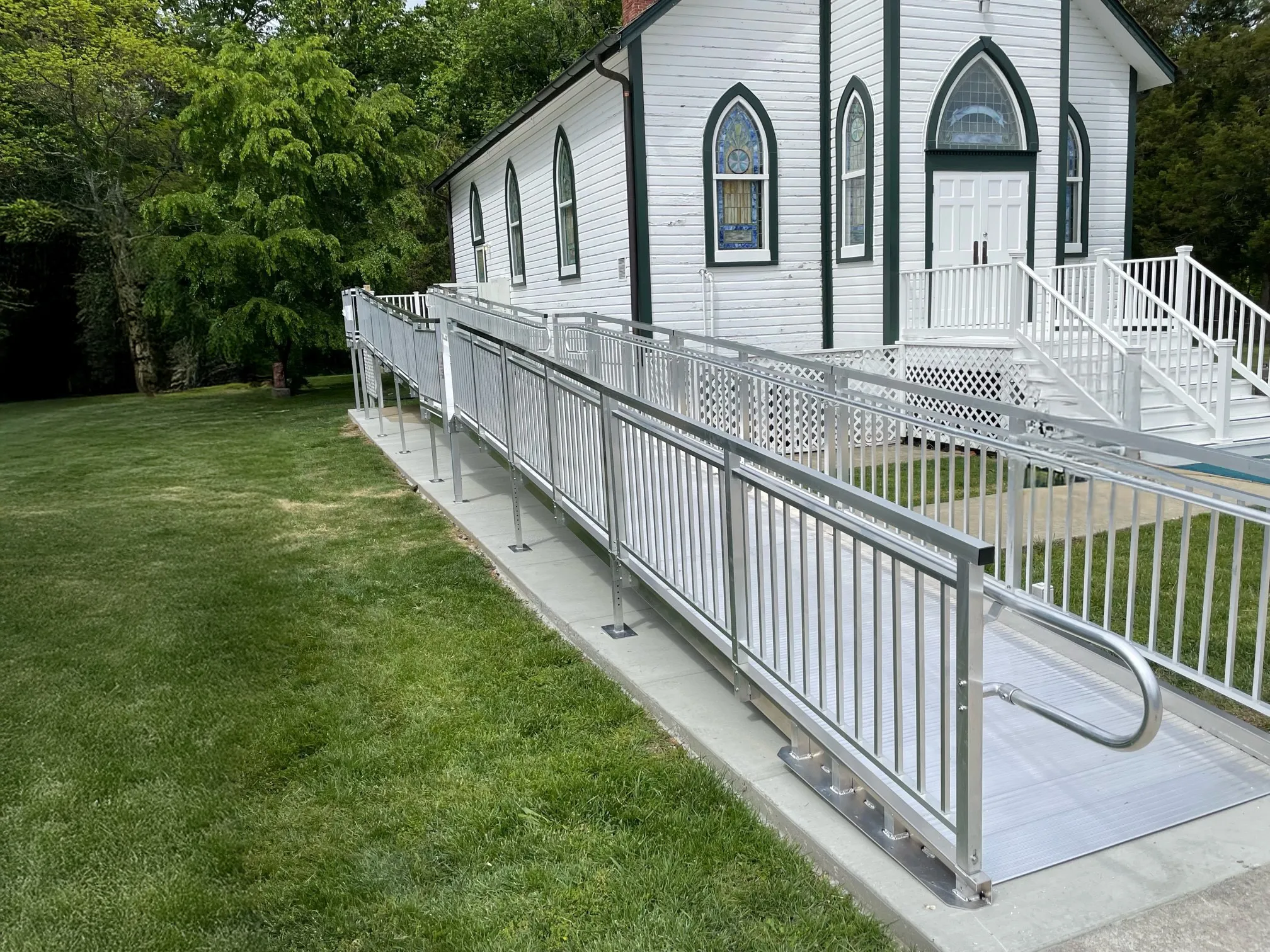
The original steps had seen better days: years of wear and exposure had taken a toll, creating safety concerns and limiting accessibility. Our team stepped in to remove the deteriorating structure and replace it with a new, fully ADA-compliant aluminum ramp system from Upside Innovations, a long-lasting solution built for daily use and minimal maintenance.
The new ramp features sturdy handrails on both sides and a gentle slope designed to comfortably accommodate wheelchairs, walkers, strollers, and anyone who benefits from a smoother, more accessible entry. Beyond functionality, the clean aluminum finish gives the building a refreshed look while standing up to the elements far better than the previous structure.
This upgrade wasn’t just about meeting code requirements, it was about creating a safer, more welcoming experience for everyone who uses the religious facility. With durable materials and thoughtful design, the new ramp ensures reliable access for years to come while reducing long-term maintenance needs.
Case Study: Accessible Living at Catholic University
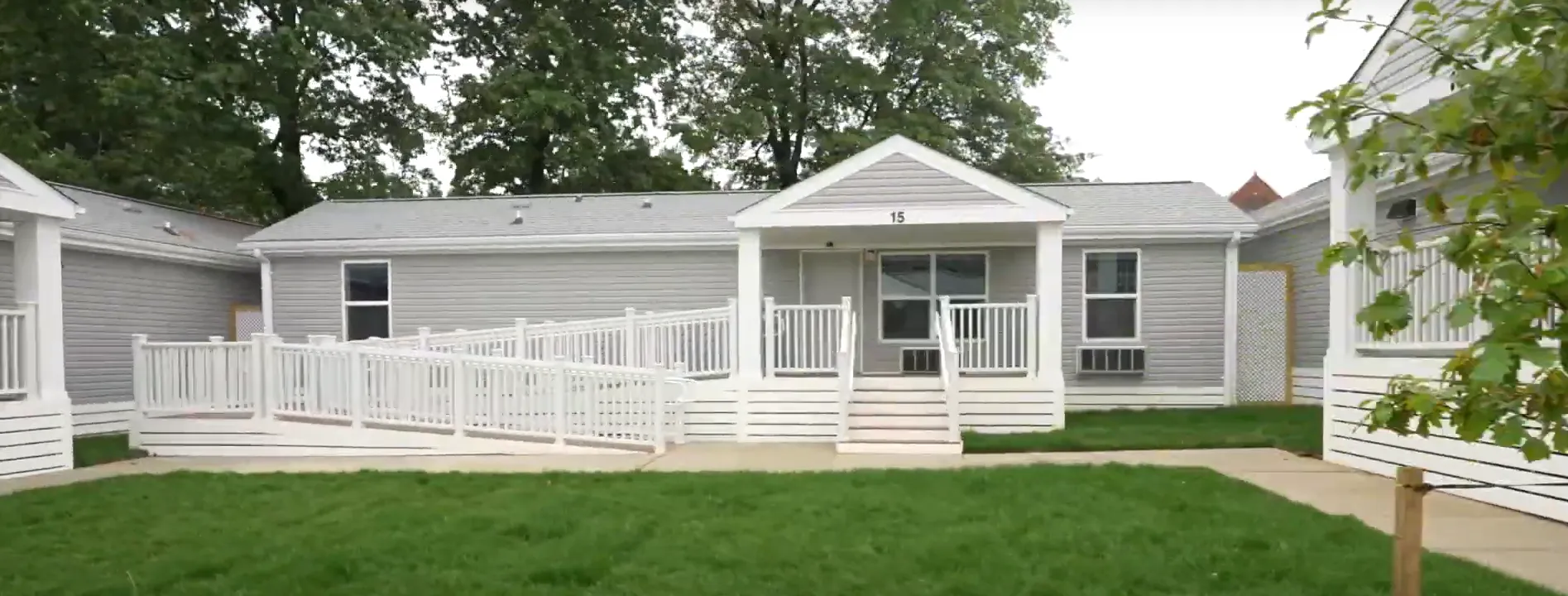
A strong example of how accessibility can be thoughtfully integrated into modular housing can be found in the student housing community Modular Genius delivered for The Catholic University of America. The project was designed as a series of cottage-style buildings arranged around shared courtyards, creating a residential environment that feels open, connected, and walkable.
Each courtyard, or “quad,” included one fully ADA-accessible unit, ensuring that accessible housing was evenly distributed throughout the community rather than isolated to a single area. These units were designed with both exterior and interior accessibility in mind. Ramps provided smooth, compliant access into the buildings, while interior layouts were carefully planned to support ease of movement and daily living.
Inside the ADA units, accessibility extended well beyond the entryway. Kitchens featured countertops set at accessible heights, lowered microwaves for easier reach, and clear floor space to accommodate wheelchair movement. Bathrooms were equipped with ADA-compliant layouts, including grab bars and accessible fixtures designed to support independence and safety. Laundry areas were also configured for ease of access, allowing students to comfortably use washers and dryers without unnecessary strain.
By integrating these features directly into the design of the cottages, accessibility became a natural part of the living experience rather than an add-on. The result was a housing solution that supported independence, dignity, and inclusion while maintaining the same aesthetic and quality found throughout the rest of the community.
This project highlights how modular construction can support inclusive design at scale. By planning accessibility from the outset and incorporating it seamlessly into each quad, Modular Genius helped create a campus environment that works for all students, regardless of mobility needs.
At Modular Genius, we take pride in delivering practical, well-built accessibility solutions that support the communities we serve. Whether it’s a ramp replacement, a modular building, or a full site upgrade, our goal is always the same: make spaces more functional, inclusive, and built to last.
For more information about modular construction Contact Us or get a Free Quote